 Call us: +48 58 6228900
 Feedback
 Newsletter





FRAM
FRAM Memory (Ferroelectric Random Access Memory) is a modern, non-volatile memory technology that combines the features of RAM and EEPROM. It offers fast data writing, low power consumption, and extremely high endurance—up to trillions of write cycles. These characteristics make FRAM an ideal solution for applications requiring frequent data writing, high reliability, and energy efficiency.
What Is FRAM and How Does It Work?
FRAM operates by changing the polarization of a ferroelectric material, enabling very fast data writing and reading without the need for constant power. Unlike EEPROM or Flash, FRAM allows nearly instantaneous data storage with no delays and no memory cell degradation during frequent use.
Key Parameters of FRAM Memory
✔ Capacity – from a few kilobits to several megabits (e.g., 4Kb, 64Kb, 256Kb, 1Mb)
✔ Write Time – typically under 100 ns, with no delay or need for buffering
✔ Write/Erase Cycles – up to 10¹² cycles (trillions of cycles)
✔ Data Retention – up to 100 years without power
✔ Communication Interface – I²C, SPI, parallel
✔ Supply Voltage – 1.8V, 3.3V, 5V
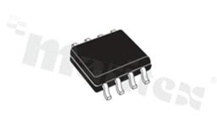
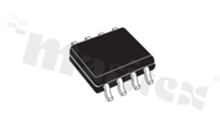
✔ Packaging Options – SOIC, TSSOP, DFN, BGA – ideal for both industrial and consumer-grade projects
Applications of FRAM Memory
FRAM is used in applications where speed, durability, and data safety are crucial:
• IoT Devices and Wireless Sensors – store measurement data without risk of loss during power failure
• Industrial Automation – event logging, machine status monitoring
• Automotive Systems – real-time data logging (black boxes, system logs)
• Medical and Diagnostic Equipment – reliable patient data storage
• Consumer Electronics & Wearables – store user settings and statistics
• ATMs, POS Terminals, Smart Meters – log operational and transactional data securely
Types of FRAM Memory
Serial FRAM (I²C, SPI)
✔ Compact, energy-efficient, ideal for microcontrollers and IoT systems
✔ Examples: FM24C64, MB85RC256V, CY15B104Q
Parallel FRAM
✔ Higher data throughput, used in high-speed applications
✔ Examples: MB85F256, FM28V020
Embedded FRAM
✔ Integrated into some microcontrollers (e.g., Texas Instruments MSP430 FRAM series)
✔ Reduces external components and simplifies PCB design
Why Choose FRAM?
✔ Exceptional endurance – up to trillions of write cycles
✔ Instant data writing – no delays or buffering
✔ Low power consumption – perfect for battery-powered devices
✔ Data security – resistant to power loss and interference
✔ Easy integration – interfaces compatible with EEPROM and Flash
✔ Wide range of applications – from IoT to advanced industrial systems
 Technical documentation

|
Quantity [pcs] |
Net price [PLN/pcs] |
|---|---|
| 1+ | 4.43 |
| 10+ | 4.21 |
| 25+ | 3.99 |
| 100+ | 3.54 |
|
Quantity [pcs] |
Net price [PLN/pcs] |
|---|---|
| 1+ | 5.72 |
| 10+ | 5.46 |
| 25+ | 5.13 |
| 100+ | 4.57 |
|
Quantity [pcs] |
Net price [PLN/pcs] |
|---|---|
| 1+ | 26.11 |
| 5+ | 25.36 |
| 25+ | 23.09 |
| 100+ | 20.77 |
| 500+ | 17.33 |
|
Quantity [pcs] |
Net price [PLN/pcs] |
|---|---|
| 1+ | 13.52 |
| 10+ | 12.85 |
| 25+ | 12.17 |
| 100+ | 10.82 |
|
Quantity [pcs] |
Net price [PLN/pcs] |
|---|---|
| 1+ | 22.81 |
| 5+ | 22.13 |
| 25+ | 21.29 |
| 100+ | 20.49 |
| 250+ | 20.15 |
| 500+ | 19.31 |
|
Quantity [pcs] |
Net price [PLN/pcs] |
|---|---|
| 1+ | 16.08 |
| 5+ | 14.87 |
| 25+ | 12.87 |
| 100+ | 11.58 |
| 500+ | 9.39 |
|
Quantity [pcs] |
Net price [PLN/pcs] |
|---|---|
| 1+ | 4.68 |
| 10+ | 4.45 |
| 25+ | 4.21 |
| 100+ | 3.75 |
|
Quantity [pcs] |
Net price [PLN/pcs] |
|---|---|
| 1+ | 14.08 |
| 10+ | 13.39 |
| 25+ | 12.67 |
| 100+ | 11.26 |
|
Quantity [pcs] |
Net price [PLN/pcs] |
|---|---|
| 1+ | 16.93 |
| 10+ | 16.09 |
| 25+ | 15.24 |
| 100+ | 13.54 |
|
Quantity [pcs] |
Net price [PLN/pcs] |
|---|---|
| 1+ | 37.06 |
| 10+ | 35.24 |
| 25+ | 33.36 |
| 100+ | 29.63 |
|
Quantity [pcs] |
Net price [PLN/pcs] |
|---|---|
| 1+ | 82.12 |
| 5+ | 73.04 |
| 25+ | 63.96 |
| 100+ | 55.25 |
| 500+ | 45.03 |