 Call us: +48 58 6228900
 Feedback
 Newsletter





Comparators
Comparators are specialized electronic circuits that compare two voltage signals and generate an output signal indicating which one is greater. Due to their high-speed operation, precision, and wide range of applications, they are essential components in measurement circuits, protection systems, analog-to-digital converters (ADC), controllers, and industrial automation.
How Do Comparators Work?
A voltage comparator compares two input voltage levels and sets the output to the corresponding logical state:
- If the non-inverting input (+) voltage is greater than the inverting input (-) voltage, the output switches to a high state (1).
- If the inverting input (-) voltage is greater, the output switches to a low state (0).
This functionality allows comparators to act as electronic switches, enabling precise voltage level detection and control signal generation.
Key Parameters of Comparators
✔ Propagation delay (response time) – defines how quickly the comparator responds to input signal changes.
✔ Input offset voltage – the minimum voltage difference required to switch the output state.
✔ Input voltage range – the allowable range of voltages the comparator can compare.
✔ Output current – the maximum current the comparator can supply to a load.
✔ Output type – open collector, voltage output, TTL, or CMOS, adapted for different applications.
Applications of Comparators
Comparators have a wide range of applications in modern electronic systems, including:
- Analog-to-digital converters (ADC) – precise conversion of analog signals into digital values.
- Protection systems – detecting overcurrent, short circuits, and critical voltage levels.
- Industrial automation – voltage control in PLC controllers, sensors, and IoT systems.
- Automotive electronics – battery voltage monitoring, ABS systems, and ECU modules.
- Voltage and current regulators – used in stabilizers and power management circuits.
- Threshold detectors – identifying voltage levels in measurement and alarm systems.
Types of Comparators
Standard Comparators
✔ Basic circuits for general applications.
✔ Popular models: LM311, LM393, LM339.
High-Speed Comparators
✔ Feature very short propagation delays.
✔ Used in high-speed ADCs and digital systems.
✔ Examples: LT1016, LMV722.
Precision Comparators
✔ Have low input offset voltage, ensuring high accuracy.
✔ Used in measurement circuits and precision medical applications.
✔ Examples: MAX999, TLV3501, AD790.
Comparators with Hysteresis (Schmitt Trigger)
✔ Provide noise immunity and eliminate signal bouncing.
✔ Ideal for detecting slowly varying voltage signals.
✔ Examples: LM2903, TLV3701.
Why Choose Comparators?
✔ Precision operation – ideal for accurate voltage signal comparison.
✔ Fast response time – allows instantaneous switching between logic states.
✔ Wide range of applications – from industrial automation to automotive and measurement systems.
✔ High reliability – crucial for safety and critical systems.
✔ Low power consumption – perfect for battery-powered and energy-efficient IoT applications.

 PDF
PDF


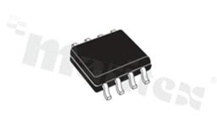
|
Quantity pcs. |
Net price PLN/pcs. |
|---|---|
| 1+ | 0.6808 |
| 10+ | 0.5714 |
| 25+ | 0.5153 |
| 100+ | 0.4779 |
| 250+ | 0.4548 |
| 500+ | 0.4085 |
| 1000+ | 0.3818 |
| 2500+ | 0.3551 |
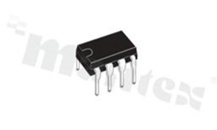
|
Quantity pcs. |
Net price PLN/pcs. |
|---|---|
| 1+ | 0.48 |
| 10+ | 0.46 |
| 50+ | 0.41 |
| 100+ | 0.38 |
| 500+ | 0.34 |

|
Quantity pcs. |
Net price PLN/pcs. |
|---|---|
| 1+ | 2.5400 |
| 10+ | 1.3900 |
| 100+ | 0.7138 |
| 500+ | 0.5776 |
| 1000+ | 0.5118 |
| 2500+ | 0.4584 |
| 5000+ | 0.4281 |

|
Quantity pcs. |
Net price PLN/pcs. |
|---|---|
| 1+ | 0.6808 |
| 10+ | 0.5714 |
| 25+ | 0.5153 |
| 100+ | 0.4779 |
| 250+ | 0.4548 |
| 500+ | 0.4085 |
| 1000+ | 0.3818 |
| 2500+ | 0.3551 |